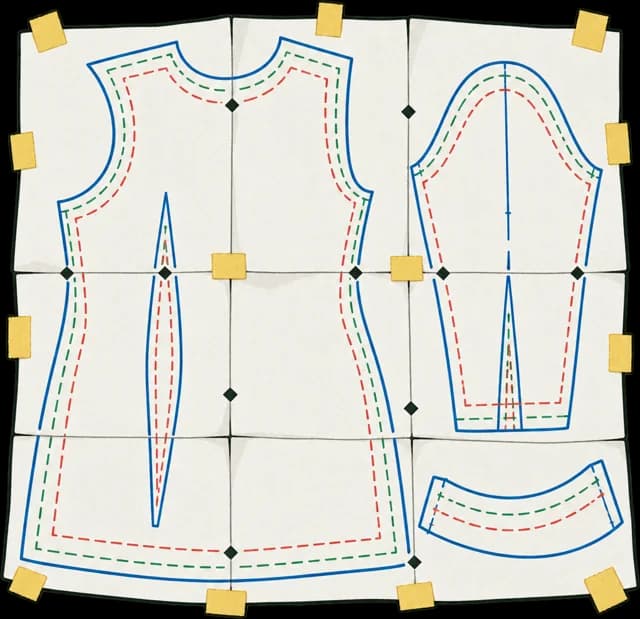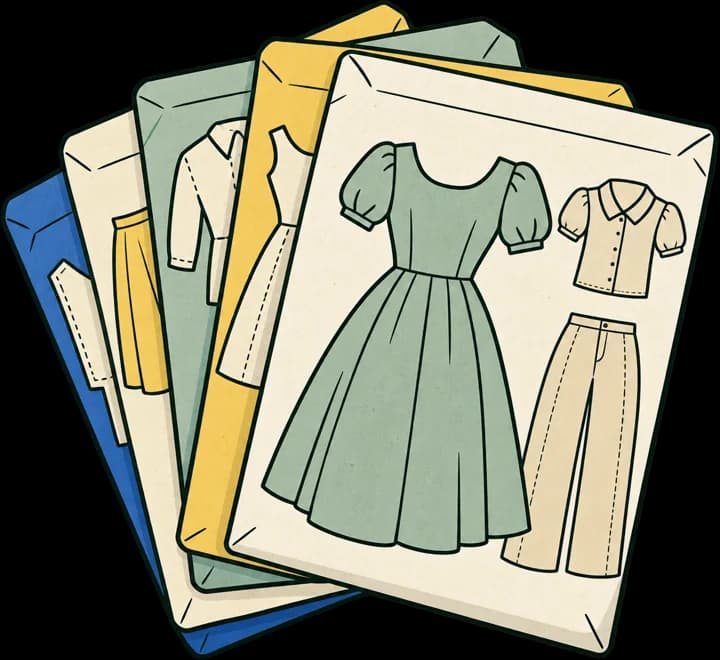
The pattern fits. The instructions are drafted. Now comes the part nobody teaches first: turning one drawing into files a stranger can print in their spare room, take to a copyshop or project onto a table, and get the right size every time.
This guide goes from a finished draft to a set of files you can list. It's the order we'd do it in, and it doesn't assume any particular software.
Know what buyers expect
A buyer of a PDF pattern isn't buying one file. They're choosing how they want to work tonight, so a pattern usually comes as a set:
| File | Who it's for | What makes it different |
|---|---|---|
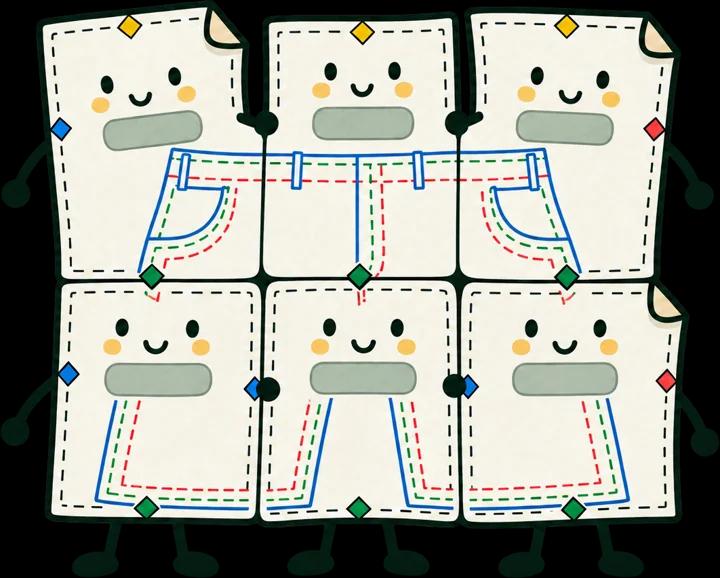
| Tiled A4 | Home printers outside North America | Many pages, taped together |
| Tiled US Letter | Home printers in the US and Canada | The same, on a different grid |
| A0 | Copyshops outside North America | Large sheets, nothing to tape |
| 36 × 48 in | Copyshops in North America | The same, on American paper |
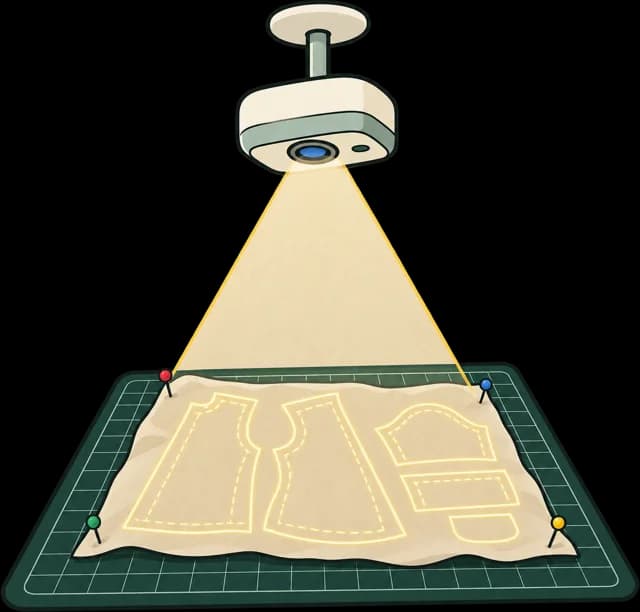
| Projector | Sewists who project onto fabric | One page, heavier lines |
| Instructions | Everyone | Keep them separate from the pattern |
You don't have to offer every row on day one, but each one you skip is a buyer you've asked to do extra work. A4 and Letter aren't interchangeable either: the pages are different shapes, so one grid doesn't fit both. Our paper sizes tool shows them side by side, and the tile calculator shows how many pages your pattern will take.
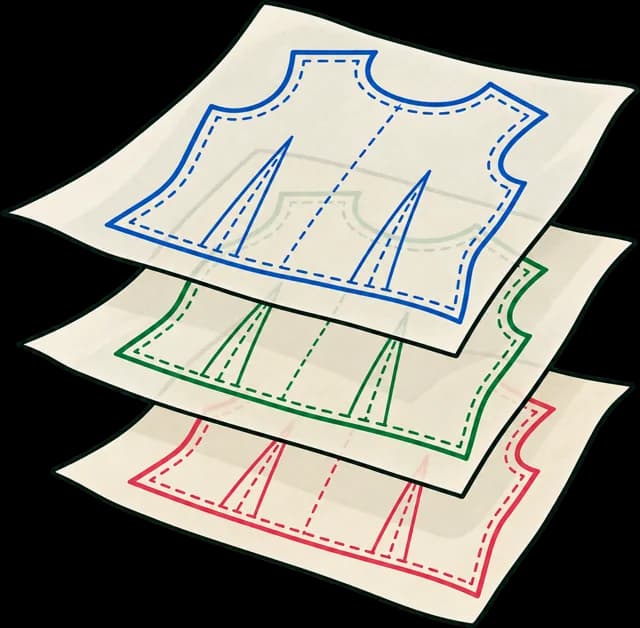
Put each size on its own layer
This is the single biggest favour you can do a buyer. With each size on its own PDF layer, someone sewing a 14 can hide every other size, print only theirs, and save ink, paper and eyesight. On a projector it matters even more: every visible size is a line they might cut by mistake.
Set this up in your master file, before anything else. One layer per size, named after the size. Shared things such as grainlines and notches go on their own layers. Our guide to setting up a layered master file goes through it step by step.
Add a test square, and say how to use it
Every pattern needs something a sewist can measure before they cut. A 100 mm square, or a 4 in one, on the first page does the job. Say it plainly next to the square: print at 100% or Actual size, then measure.
Most scale problems happen in the print dialog, with Fit to page, and you can't control that. You can make the check easy, and you can set the file to ask for actual size. If a square comes out wrong, this guide explains why.
Test before you sell
A pattern that fits you hasn't been tested yet. Testers find the notch that doesn't match, the step that makes sense only to you, and the size you never sewed. They also find file problems: a layer that won't switch off, a page that prints with a gap.
Send them the same kind of files you'll sell, so the files get tested too. We've written a whole guide on running a pattern test.
Version everything
Give the pattern a version from the first tester file, and print it on every page. When someone writes in with a problem, the first thing you need to know is which file they have. A small correction after release is normal. A correction nobody can tell apart from the original isn't.
Price the set, not the files
There's no single right price, so be wary of anyone who gives you one. A way to reach yours:
- Find ten patterns close to yours in skill level, garment and audience, and write down their prices.
- Work out what you keep. On Etsy, that's the price less a listing fee of $0.20 and a 6.5% transaction fee, plus payment processing, which varies by country. As an example, on a $14 pattern the transaction fee is $0.91.
- Count your own costs: testers, any grading or formatting you paid for, and the time you'll spend answering questions.
- Decide what's included. Selling every format at one price is simple to explain. If you charge extra for a format, say so before someone buys.
Check Etsy's fees page yourself before you do the sums: fees change, and these are what it said on 7 November 2026.
Fit the files into Etsy
Etsy lets you attach up to five digital files to an instant-download listing, and each one can be up to 20 MB. PDF and ZIP are both accepted. That's what Etsy's help page said on 7 November 2026. The page carries no date of its own, so check it again before you list.
Five files is less than it sounds once you've read the table above. The usual way round it is to zip by how people work:
home-printing.zip: tiled A4 and US Lettercopyshop.zip: A0 and 36 × 48 inprojector.zip: the projector file, plus a dark-fabric version if you make oneinstructions.pdf
Vector pattern PDFs are usually small. If a file is over 20 MB, it's almost always carrying embedded images: a scanned sketch, a photo on the cover, or editing data your software saved inside the PDF. Take those out before you split anything.
If you sell on your own site, you'll have your shop software's limits instead, but the same groups work well there too.
Before you press publish
- Print one page of each paper size at 100% and measure the test square.
- Open each file and switch every layer off and on.
- Tape a full tiled set together at least once. Marks that look fine on screen can fall in the printer's margin.
- Check the version on the file matches the version in the listing.
- Read the instructions on a phone, because many people will.
Teaching this?
This guide works as a lesson: the sections above run in the order a student needs them. Set the class one small pattern, a bag or a pouch, and take it through every format. If you teach, we also offer a code for your students.
Your next step
Everything above the pricing section can come from one master file. Upload yours and build free tester files: every format, layers kept, each file measured, marked TEST COPY for you and your testers. You pay only when you're ready to sell.
Questions
Do I need to offer every format?
No, but each one you leave out is a buyer you've asked to do extra work. Tiled A4 and US Letter come first, because they're what most people can print at home.
Can I sell only an A0 file?
You can, but buyers then need a copyshop or a large-format printer, and many want to start tonight at home.
What file limits does Etsy have?
On 7 November 2026, Etsy's help page said a listing takes up to five digital files of up to 20 MB each, and that PDF and ZIP are accepted. Check the page before you list, as it may change.
What should go in the file name?
The pattern name, the format and the version, such as trouser-a4-v1-0.pdf. Then a support email can start with the right file.